
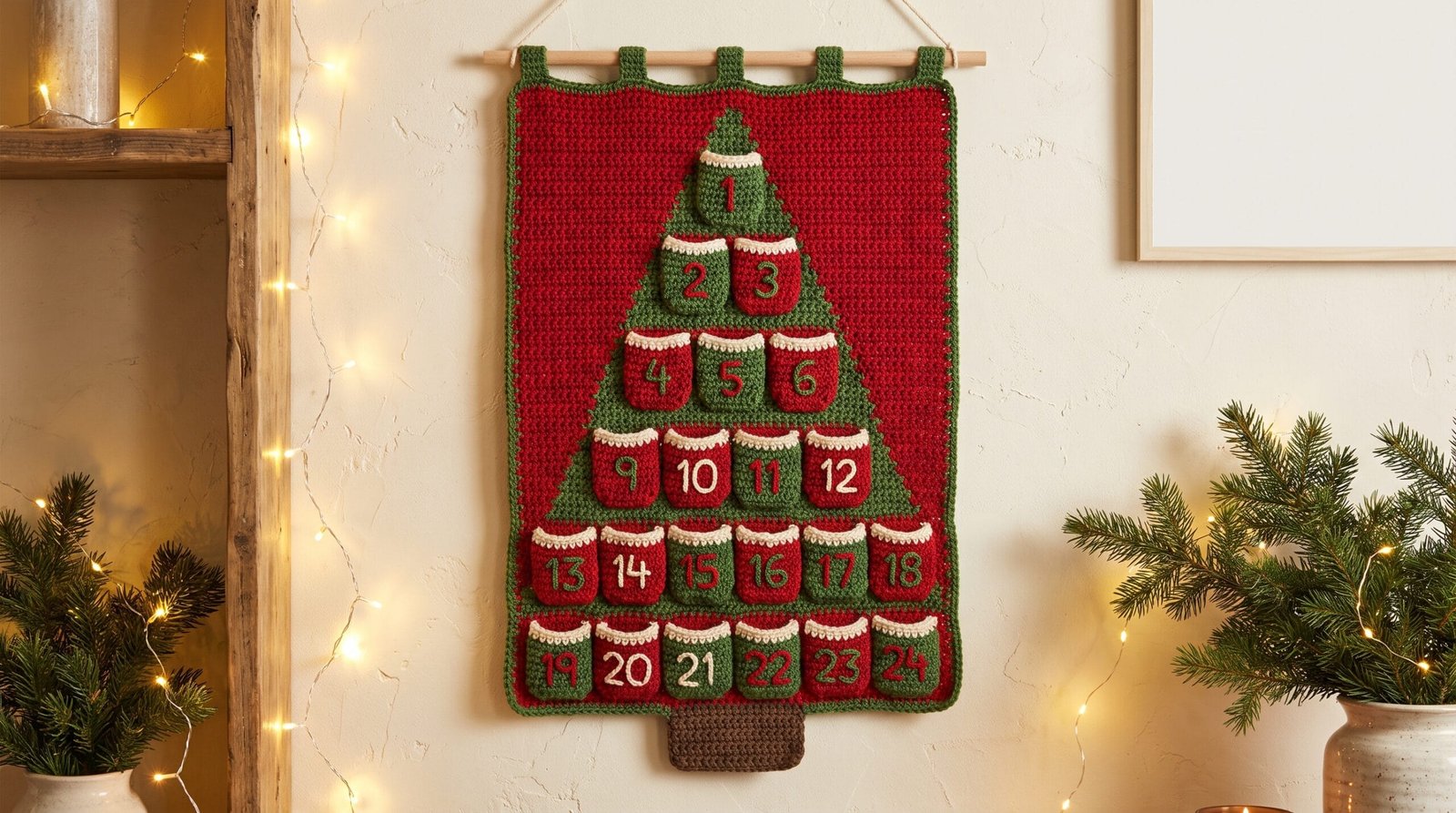
I made my first crochet advent calendar almost accidentally, the week before December started and in a mild panic, and six years later it’s still the one my family actually waits for each year instead of a cardboard one from the store. A crochet advent calendar is one of those rare projects that gets more valuable the longer you keep it, since it’s reusable year after year rather than thrown out every January. In this guide I’ll walk through the best options actually available for 2026, whether you want to buy a kit, follow a free pattern, or build your own from scratch.
I’ve made two full calendars myself over the years and helped a friend troubleshoot a third, which means I’ve got real opinions about what holds up to repeated yearly use versus what looks great in a photo and falls apart by its second Christmas. Those lessons, mostly learned the hard way through things I’d do differently in hindsight, are what this whole guide is built around.
What Actually Makes a Good Crochet Advent Calendar
Before getting into specific picks, it’s worth knowing what separates a calendar that becomes a genuine family tradition from one that gets made once and never comes back out of storage.
Durability over delicacy. This thing gets handled by excited kids, stuffed and unstuffed daily for 24 days, and stored for eleven months a year. A sturdy worsted weight construction holds up far better long-term than a delicate lace-weight design, however pretty the thinner version looks in a listing photo.
Pockets or pieces sized for actual small gifts. It sounds obvious, but I’ve seen patterns with pockets too shallow to hold anything beyond a folded note. If you’re planning to tuck in small treats or trinkets, double-check a pattern’s actual pocket dimensions before committing to it.
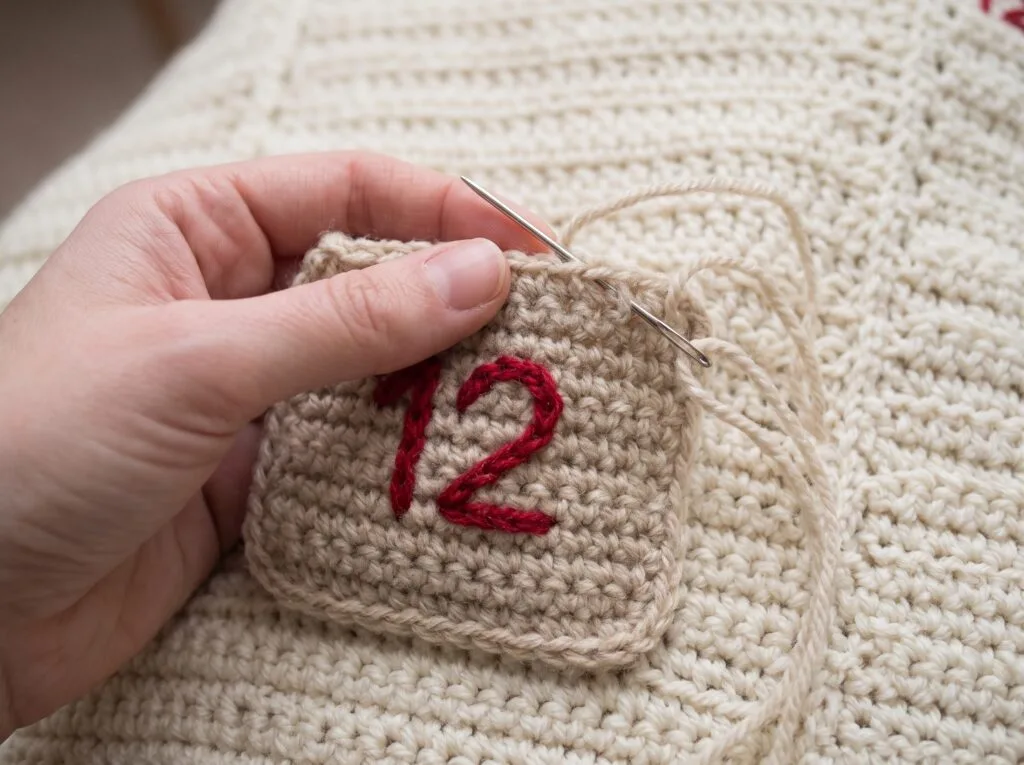
A clear numbering or dating system. Whether that’s embroidered numbers, separate numbered tags, or a sewn-on felt digit, you want this built in from the start rather than improvised later, since retrofitting numbers onto 24 identical pockets after the fact is a genuinely tedious afternoon.
Download free Crochet Advent Calendar Pattern
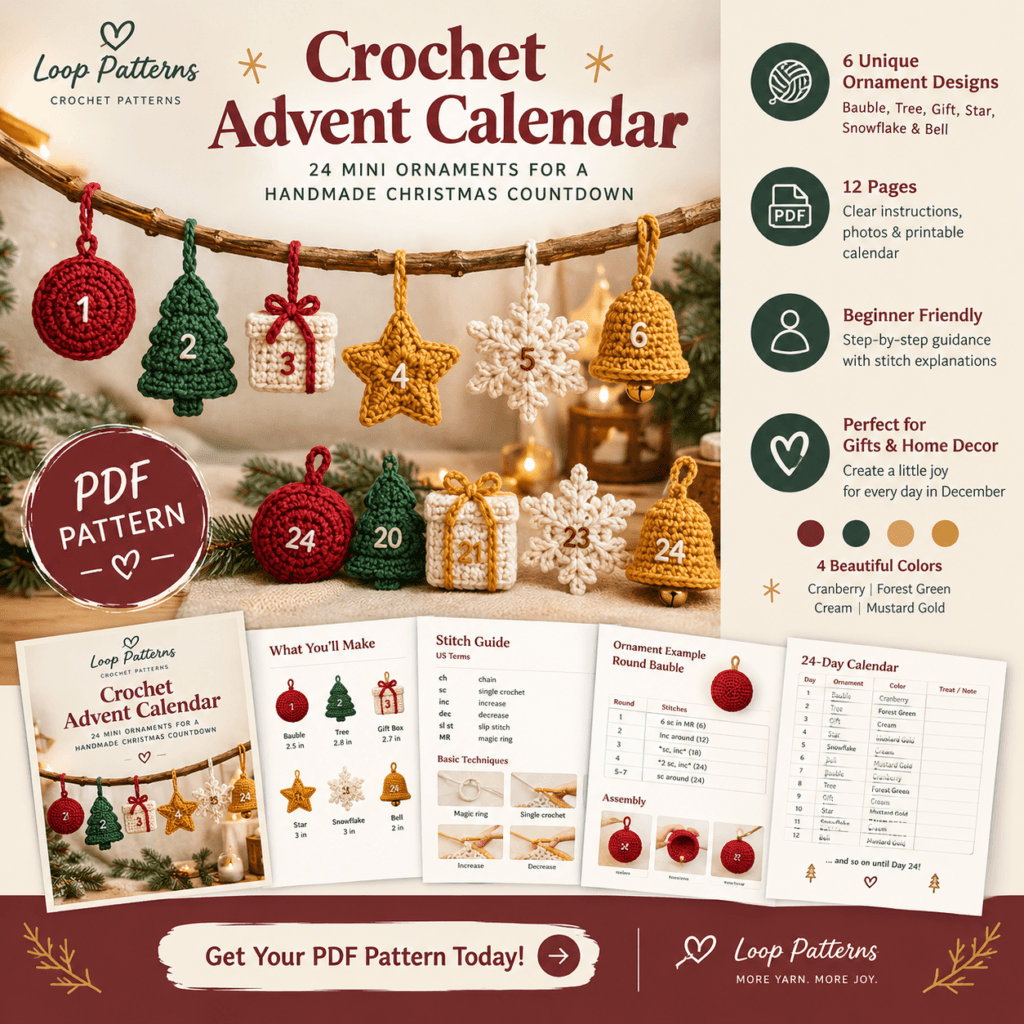
Best Crochet Advent Calendar 2026: Where to Actually Find One
Here’s where I’d actually point someone looking for a 2026 option, broken into kits you can buy fully supplied and free patterns you can make entirely from your own stash.
TOFT’s Advent CAL 2026. This is a mystery crochet-along format — you receive a daily fragment of the pattern from December 1st through 24th, with the full pattern released once the mystery project is complete, using TOFT’s own yarn in a curated palette. It’s a premium, pre-order experience rather than a budget option, and it leans toward crocheters who enjoy the surprise-reveal format of a CAL over having the whole pattern upfront.
Crochet Society’s 2026 CALendar. This one includes a customizable CAL blanket plus seven bonus patterns, with both digital patterns and a printed pattern book included, and left- and right-handed video tutorials for every pattern. It’s a substantial, well-supported kit if you want built-in video instruction alongside the physical materials.
Hobbii’s 2026 Advent Calendar (“Moments of Hygge”). Hobbii’s version releases a new designer pattern weekly throughout Advent rather than daily, aimed at both knitters and crocheters depending on which version you choose, with the final designs kept a surprise until the countdown wraps up.
Easy As Knit’s first-ever calendar, launching for 2026. This is a newer entrant specifically, offering four exclusive accessory patterns with a new design revealed weekly, available in multiple languages. Worth knowing it’s described as a limited first-year release, so availability may be more constrained than more established kits.
Marly Bird’s free Crochet Gnome Advent Calendar. If you’d rather not pay for a kit at all, this is a genuinely free, beginner-friendly pattern with full video tutorial support, frequently recommended as a solid starting point for a first-time advent calendar maker.
Briana K Designs’ pattern. A home-decor-style wall hanging, crocheted flat in pieces and sewn together, with a free version available alongside a paid upgrade, plus linked YouTube video tutorials throughout. I’ll link to her tutorial specifically below.
Off The Beaten Hook’s free pattern with full video walkthrough. A detailed, free written pattern (main panel plus individual pockets) written in US terms, with gauge and finished sizing included, paired with a complete video tutorial for anyone who wants to follow along visually rather than purely from text.
Crochet Advent Calendar 2026 Patterns: Free vs. Paid, What to Actually Expect
Knowing what you’re getting into with each category saves a fair amount of disappointment, since “free” and “paid” patterns in this specific project type tend to differ in some predictable ways.
Free patterns, in my experience, are genuinely excellent for a first attempt, especially ones like Marly Bird’s or Off The Beaten Hook’s that include full video support alongside the written instructions. What you sometimes trade for the free price is a simpler overall design — fewer decorative elements, a more basic pocket shape — compared to a paid pattern’s typically more elaborate finished look.
Paid kits and patterns, especially the branded CAL experiences like TOFT’s or Crochet Society’s, tend to include more polished design elements, curated yarn, and often better-produced video support, but they also lock you into a specific aesthic and release schedule you don’t control. If you know exactly the finished look you want and are willing to pay for a more guided, curated experience, these are worth it. If you’d rather have full creative control over colors and exact finished size, a free pattern you adapt yourself is the more flexible route.
One thing worth knowing regardless of which you choose: because this is a reusable, multi-year project, I’d personally lean toward spending a bit more time or money upfront on a design you’re confident you’ll still like in five years, rather than optimizing purely for this year’s cheapest or fastest option. That’s a different calculation than most seasonal crafts, where a one-and-done project doesn’t need to carry the same long-term weight.
Materials and General Construction
If you’re building your own rather than following a single named pattern exactly, here’s the general structure most of these share, without me inventing specific stitch counts I don’t have a tested source for.
Most designs fall into one of two basic structures: a single large panel with 24 individual pockets attached to its front (the wall-hanging style), or 24 completely separate small bags, pouches, or boxes that get strung together or displayed on a rack. The panel style is generally faster to assemble since you’re not finishing two dozen separate small pieces individually, while the separate-piece style tends to be more flexible for display and storage.
Worsted weight yarn (category 4) is far and away the most common choice across the patterns and kits I’ve covered here, largely because it strikes a reasonable balance between sturdiness and manageable crochet time across what’s inherently a large, multi-piece, time-intensive project. According to the Craft Yarn Council’s standard yarn weight system, worsted weight is categorized specifically as a medium-weight yarn that works well for a wide range of projects including accessories and home decor items, which lines up with why it shows up so consistently across advent calendar patterns specifically.
For exact finished dimensions, pocket sizing, or stitch counts, I’d point you to one of the actual tested patterns named above rather than treating any number here as verified — that’s genuinely outside what a general guide like this one should be inventing, and a tested pattern’s specific gauge and yardage will get you a far more reliable finished result than any rough estimate I could offer secondhand.
If you want a clean, professional finish on each individual pocket or ornament piece rather than a bulky visible knot, my how to fasten off crochet guide covers the finishing technique I use on every single piece of a project like this — and with 24-plus individual components, a clean fasten-off really does add up to a noticeably more polished final result.
A Free Video Walkthrough Worth Watching
If you’d rather see the construction process in motion before committing to a pattern, Briana K Designs has a YouTube video tutorial walking through her farmhouse-style crochet advent calendar, paired with her written pattern. It’s a genuinely useful reference specifically for seeing how the individual pocket pieces attach to the main panel, which is a step that’s sometimes harder to picture from written instructions alone.
Making It Reusable Year After Year
Since the entire appeal of a handmade, reusable countdown over a disposable paper one is its longevity, it’s worth building a few habits around storage and care from the very first year.
Store it somewhere it won’t get crushed or exposed to moisture for the eleven months it’s not in use — a labeled storage bin works better than a stuffed-into-a-closet approach, especially if there are small loose pieces like individual numbered tags that could otherwise get separated and lost.
If you’re filling pockets with anything that could stain the yarn — chocolate, certain candies — consider small wrapped treats or little plastic bags as a liner rather than placing items directly against the yarn, since a chocolate smear is a genuinely annoying thing to try to spot-clean out of a finished piece you want to keep for years.
Washing matters too. If the yarn you used is machine washable, it’s worth an occasional gentle wash between seasons if it’s picked up dust or handling grime, but check your specific yarn’s care instructions first — not every fiber or embellishment (felt numbers, glued-on decorations) survives a washing machine the same way the base crochet fabric does.
Choosing a Theme That Actually Fits Your Home
Beyond construction and materials, the visual theme is worth thinking through deliberately, since this is a piece that’ll likely sit out on display somewhere prominent every December for years.
A wall-hanging panel style, like Briana K Designs’ or Off The Beaten Hook’s, works well in a home without much spare surface space, since it hangs flat against a wall rather than taking up a shelf or mantel. A freestanding or table-display style, by contrast, needs somewhere stable to actually sit, which is worth confirming you have room for before committing to that format.
Color palette matters more than people initially think too. A calendar built around deep reds and greens reads as classically Christmas but can clash if your home’s existing holiday decor leans more neutral or pastel. I’d genuinely recommend sketching or at least mentally placing the finished piece in its intended spot before buying yarn, rather than discovering a color mismatch after 24 pockets are already made.
If you’ve got kids involved in picking the design, their input is worth weighing seriously too — a calendar they’re excited about from day one tends to get more enthusiastic daily use than one chosen purely for how it’ll look to adult guests.
Budgeting Time and Yarn for the Project
Because this project involves so many individual pieces, it’s worth budgeting both time and materials more deliberately than you might for a single smaller project.
For yarn, I’d estimate on the generous side rather than cutting it close, since running short mid-project with 20 pockets already matching and only 4 left in a slightly different dye lot is a genuinely frustrating position to be in. Buying an extra skein or two beyond a pattern’s stated yardage, especially in your main color, is cheap insurance against that specific headache.
For time, breaking the project into weekly batches — a handful of pockets per week rather than trying to power through all 24 in one sitting — tends to keep the work feeling manageable rather than like a slog. I map mine out on a simple checklist taped near my crochet spot, checking off pockets as I finish them, which does a surprising amount for motivation on a project this repetitive. It also makes it much easier to spot early if your tension is drifting across pockets made weeks apart, since you’re comparing against a visible running list rather than relying purely on memory.
Common Mistakes I See People Make
Starting too close to December and rushing the whole project. I did this myself the first time, and while it worked out, it was a genuinely stressful few weeks. A project with 24-plus individual pieces benefits enormously from starting in October or even earlier, rather than trying to finish it in a sprint right before Advent begins.
Choosing a design based purely on looks without checking pocket depth. A gorgeous photo doesn’t tell you whether a pocket can actually hold a small toy or treat without it falling straight back out. Check a pattern’s actual finished pocket dimensions, not just the overall calendar size, before committing.
Skipping a numbering plan until the very end. Deciding how you’ll mark each day — embroidery, separate felt numbers, printed tags — after all 24 pockets are already finished is a lot more work than planning it in from the start, when you can build the numbering into the construction process itself.
Gifting a Finished One vs. Making It for Yourself
There’s a real difference in how I’d approach this project depending on whether it’s headed for your own living room or as a gift to someone else, and it’s worth thinking through before you start.
Making one for your own family gives you full control over sizing, color, and theme, and you get to live with the decisions you make for years, which is honestly a good argument for taking your time on the theme-choosing step covered above rather than rushing into whatever yarn happens to be on hand.
Gifting a finished calendar is a bigger undertaking than most people expect going in, mainly because you’re essentially handing someone a multi-year tradition rather than a single-use item, and it’s worth matching the style to their actual home and taste rather than your own preferences. I made one as a wedding gift a few years back and specifically asked about color preferences beforehand rather than assuming, which saved me from guessing wrong on something meant to last the recipients a long time. A quick, casual question about their holiday decor style costs nothing and avoids handing someone years of a color scheme they’d never have chosen themselves.
If you’re gifting to a family with young kids specifically, consider including a small insert card explaining how to use it and suggesting it gets passed down or reused rather than treated as disposable — a surprising number of people who didn’t grow up with a reusable calendar genuinely don’t think to treat a handmade one differently from a paper store-bought version until it’s pointed out. A short handwritten note goes a long way toward setting that expectation from the very first year.
Frequently Asked Questions
Can I make one with scrap yarn instead of buying new? Absolutely, and it’s one of the better uses for a varied stash I’ve found, especially for a panel-and-pocket style where each pocket can be a different leftover color without looking mismatched — in fact, a scrappy, multicolor look is a popular deliberate style choice for exactly this reason.
How long does it actually take to make? This varies a lot by design complexity, but between the main panel or base structure and 24 individual pockets or pieces, most crocheters I know budget several weeks of regular, not-rushed crocheting time rather than expecting to finish it in a single weekend.
Do I need to fill it with store-bought treats, or can I use handmade items? Either works fine, and plenty of crocheters fill their calendar with small handmade items — tiny amigurumi, folded paper notes, small ornaments — rather than purchased candy or trinkets, especially for a calendar meant to double as a countdown to handmade gift-giving.
Is this a good beginner project, or should I wait until I’m more experienced? A panel-with-pockets style using basic stitches, like several of the free patterns mentioned above, is genuinely beginner-friendly in terms of stitch complexity. The real challenge for a beginner is more about project management — keeping 24 pieces organized and consistent — than about any single stitch being difficult.
Wrapping Up
Whichever crochet advent calendar option you land on for 2026, starting early and picking a design you’ll genuinely want to see again next December matters more than finding the single flashiest pattern. Whether that’s a curated kit like TOFT’s or Crochet Society’s, or a completely free pattern you build from your own stash, the real payoff of this project is pulling the same one out year after year rather than starting from scratch each season.
If you’ve made your own, or you’re deciding between a couple of the options above, tell me about it in the comments — I’d love to see what designs people are drawn to this year, and what’s held up well over repeated seasons. And if this helped you pick where to start, sharing it or following along for more seasonal project guides keeps this kind of content coming.