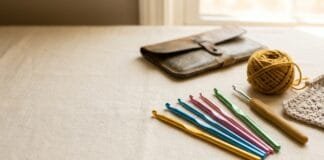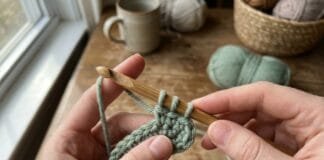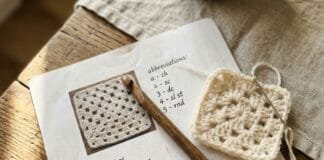
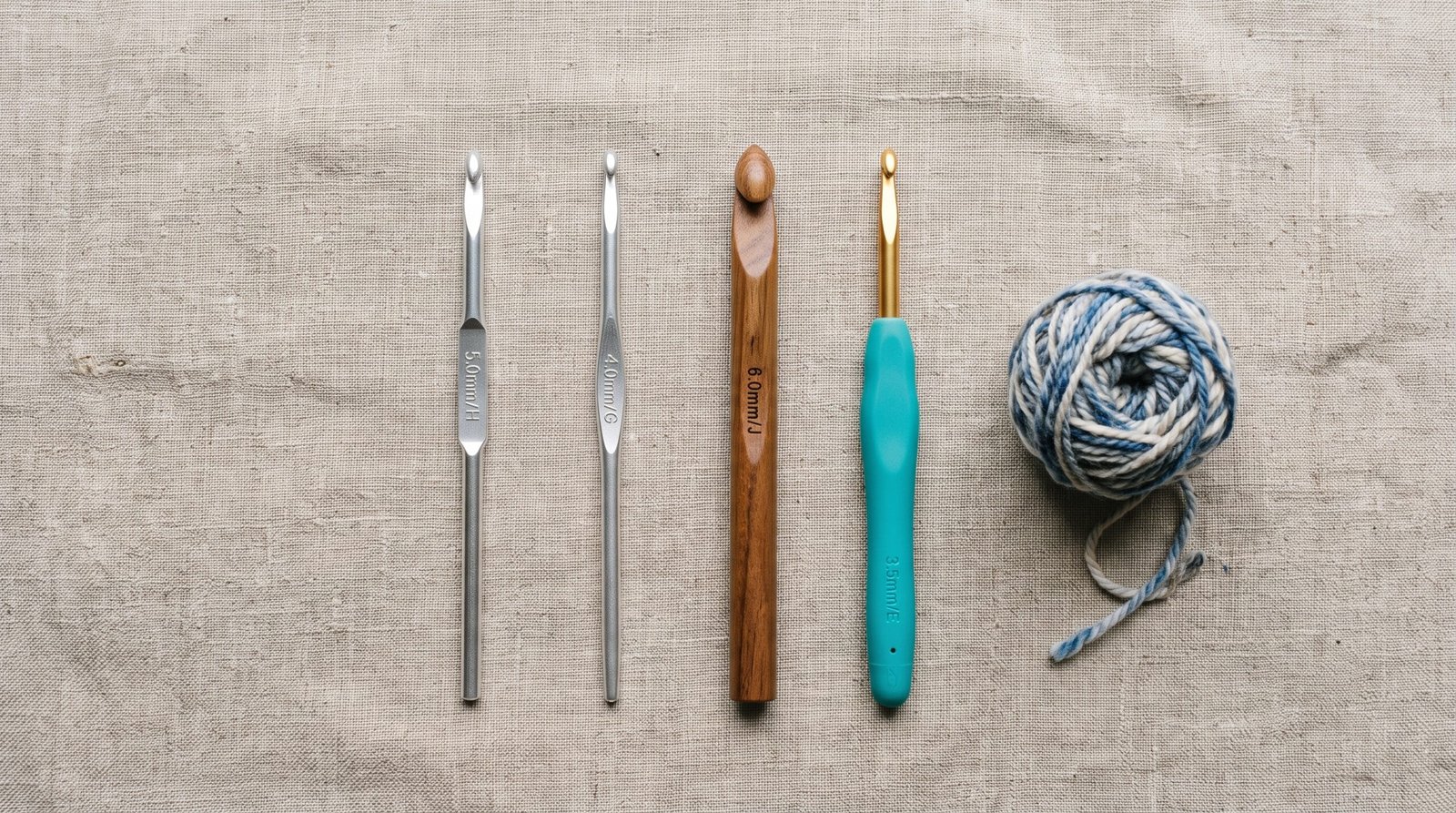
If you’ve searched for a crochet needle with hook and landed here, there’s a good chance you’re not entirely sure which tool you’re actually after — and that’s more common than you’d think. In this guide I’ll clear up the terminology, walk through the four main types of hooks you’ll run into, and help you figure out whether you need a yarn crochet hook or something else entirely.
I’ve been crocheting for about twelve years, and “crochet needle” is a phrase I hear constantly from people just starting out, usually because they’ve seen sewing and knitting needles and assumed crochet works the same way. It doesn’t, quite, and knowing why actually helps once you’re standing in a craft store aisle trying to pick one.
What People Actually Mean by “Crochet Needle With Hook”
Technically speaking, there’s no such thing as a crochet needle in the tool sense most crocheters use day to day. The correct term is simply a crochet hook — a single rigid tool with a hooked end, used to pull loops of yarn through other loops to form stitches. There’s no eye to thread, no point to push through fabric the way a sewing or tapestry needle works.
That said, “crochet needle” isn’t wrong so much as it’s an older or regional habit — plenty of people, especially those who learned informally from a family member rather than a pattern book, grew up calling it a needle simply because it’s a handheld pointed tool, the same general category their brain files knitting needles and sewing needles into.
There’s also a second, completely different tool that legitimately does get called a “crochet needle” in its own right: a small hooked implement with a latching mechanism, used in hair styling for micro braids, extensions, and dreadlock maintenance. It looks similar at a glance — a shaft with a hook at the end — but it’s mechanically different and sold in an entirely different aisle. I’ll cover that separately further down, since it’s worth knowing the two aren’t interchangeable.
For the rest of this guide, when I say “crochet hook,” I mean the standard yarn-craft tool. That’s almost certainly what you’re after if you’re planning to make a blanket, a sweater, or anything else out of yarn.
The 4 Types of Crochet Hooks You’ll Actually Encounter
Once you’re looking at yarn crochet hooks specifically, they break down into a handful of recognizable categories. Knowing these before you shop saves you from buying a set that doesn’t suit your grip or your project.
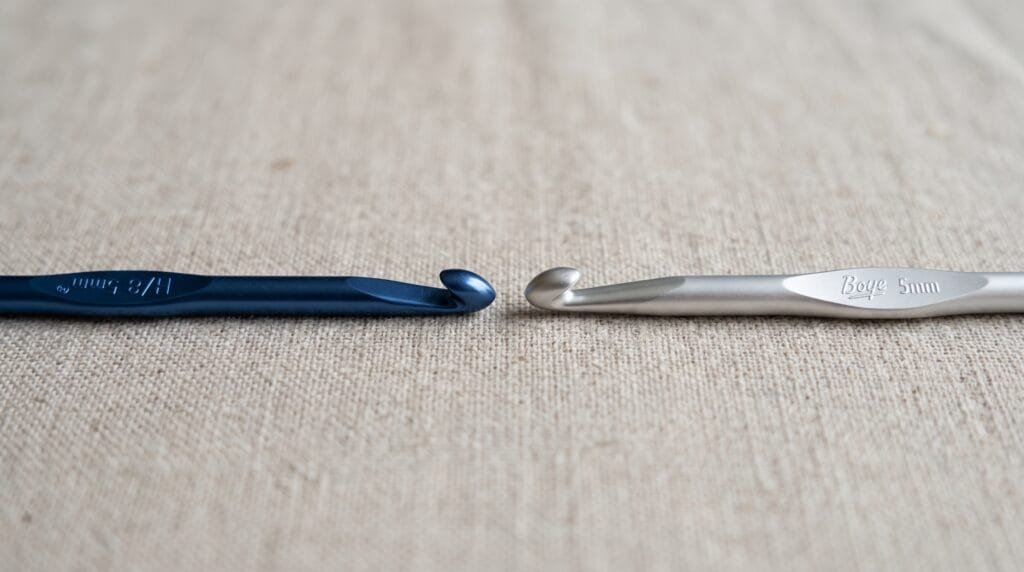
1. Inline hooks. The hook head sits directly in line with the shaft, giving a deep, straight groove that holds yarn firmly and a fairly pointed tip. Susan Bates is the classic example of this style. I find inline hooks great for anyone with a looser tension, since the deep groove helps keep yarn from slipping off mid-stitch.
2. Tapered hooks. The shaft narrows gradually toward the head, which extends slightly out past the shaft line, giving a shallower, rounder throat. Boye is the classic tapered brand. These tend to glide a little more smoothly through stitches for some crocheters, though the shallower throat means yarn can be quicker to slip off if your tension runs loose.
3. Ergonomic hooks. This isn’t about the head shape at all — it’s about the handle. Ergonomic hooks have a wider, contoured grip designed to reduce hand and wrist strain over long stitching sessions, and they can be built on either an inline or tapered head. I switched to one a few years back after a rough bout of hand cramping on a big blanket project, and for multi-hour sessions specifically, it made a real difference.
4. Specialty hooks. This is a catch-all for hooks built for a specific job rather than everyday yarn crochet — steel hooks for fine thread work and doilies, extra-long Tunisian crochet hooks for afghan stitch, double-ended hooks for certain reversible techniques, and yes, the latch-mechanism hair tool mentioned above, which is a distant cousin at best rather than a true crochet hook.
Most people starting out don’t need to think hard about all four categories at once — a basic inline or tapered set covers the vast majority of yarn projects. The specialty and ergonomic categories become relevant once you know your own hand and your own project preferences a bit better.
Crochet Needle for Hair, In Store: Clearing This One Up Properly
Since this phrase specifically brings people here, it’s worth addressing directly and honestly, even though it’s slightly outside my own area of expertise as a yarn crocheter.
The tool commonly searched as a “crochet needle for hair” is more accurately called a latch hook. Unlike a standard crochet hook, which is a single solid piece of metal, plastic, or wood, a latch hook has a small hinged gate near the hook end that opens and closes. That latch is what lets it grab and pull a strand of hair or hair extension material through in a single motion, which is the mechanism used for installing micro braids, feather extensions, and maintaining dreadlocks.
If you’re looking for this tool in person rather than online, beauty supply stores are the more reliable stop — Sally Beauty and similar chains typically carry them alongside braiding hair and extension supplies, rather than in the yarn or craft aisle of a general craft store. Some craft stores do stock a small latch-hook selection too, usually filed under rug-making supplies, since the same latch mechanism is used for traditional latch-hook rug kits.
I’d genuinely recommend checking with a stylist or a dedicated hair-extension resource for actual technique and installation guidance — that’s not something I can speak to with real experience, and giving instructions I’m not qualified on wouldn’t do you any favors. What I can tell you with confidence is that this tool and a standard yarn crochet hook are not interchangeable, even though they’re often confused by name, and buying the wrong one for your intended project is a common, easily avoided mistake.
Crochet Needle With Hook Sizes: How Sizing Actually Works
Sizing is one of the more confusing parts of buying a hook, mostly because there are multiple systems layered on top of each other depending on where and when the hook was made.
For yarn crochet hooks, you’ll typically see three possible size markings: a millimeter measurement (the actual diameter of the hook shaft), a US letter (like G, H, or J), and occasionally an older US number system that’s becoming less common on new packaging. The millimeter size is the most reliable to trust across different brands, since letter sizing hasn’t always been perfectly standardized between manufacturers.
According to the Craft Yarn Council’s standard yarn weight system, each yarn weight category has a recommended hook size range built around this millimeter measurement specifically, which is part of why the mm number is worth paying closer attention to than the letter if you’re trying to match a hook to a particular yarn.
Hair latch hooks are sized completely differently — usually by hook width in millimeters or fractions of an inch, referring to the tiny hook tip itself rather than a shaft diameter, since the tool is doing a much finer, more delicate job than pulling yarn through stitches. If a hook-size chart you find turns up numbers between 0.5mm and 2mm, you’re almost certainly looking at latch hooks for hair, not yarn crochet hooks, which generally start around 2mm and run up past 15mm for the bulkiest yarns.
Best Crochet Needle With Hook for a Beginner Starting Yarn Crochet
If you’ve read this far and confirmed you’re after a genuine yarn crochet hook, here’s the honest, no-fuss recommendation I give people starting out.
A mid-range aluminum hook somewhere in the 5mm range (roughly a US H) is the easiest place to start for most beginners, since it pairs well with widely available worsted weight yarn and is forgiving to work with while you’re still learning basic stitches. You don’t need an ergonomic handle right away — that’s a comfort upgrade worth considering once you know you’ll be crocheting regularly and for longer stretches at a time.
Beyond that single hook, I’d hold off buying a full multi-size set until you’ve actually run into a project that calls for something different. It’s tempting to buy an entire case of hooks up front, but a lot of that money ends up spent on sizes you may never reach for, depending on what kind of projects you gravitate toward.
If you’re specifically working on granny squares and want more detail on matching hook size to that particular technique, I’ve got a full breakdown in my crochet hook for granny squares guide that goes deeper into yarn-weight pairing and material choice for that project type specifically.
Where to Actually Buy a Yarn Crochet Hook In Store
Once you know you’re after the yarn-craft tool and not the hair one, the shopping part is refreshingly simple. Big-box craft stores — Michaels, JOANN, Hobby Lobby, and similar — stock crochet hooks in the same aisle as yarn, usually on a wall display sorted by size and brand. That’s genuinely the easiest place to start if you want to see and hold a few different styles before buying, since inline and tapered hooks do feel noticeably different in the hand and a photo online doesn’t convey that well.
General big-box retailers with a craft section, and even some pharmacies and grocery stores with a small seasonal craft aisle, will often carry a basic single-size hook or a small starter set, though the selection is usually limited to the most common sizes and a single generic brand. If you already know you want a specific size or brand, that’s fine for a quick pickup, but it’s not where I’d go to compare styles.
Yarn shops — the smaller, independently owned kind rather than a big chain — are worth seeking out if one exists near you. They tend to carry a more curated, higher-end selection, including ergonomic and specialty brands you won’t find at a general craft store, and the staff can usually offer genuinely useful advice based on your specific hand and project, not just point you at whatever’s in stock.
A Note for Left-Handed Crocheters
Hook shape and sizing work identically regardless of which hand you crochet with — there’s no such thing as a “left-handed hook” in terms of the tool itself, which surprises some new left-handed crocheters who assume they need to seek out special equipment the way some scissors or can openers are handed.
What does matter is grip and visibility. Some crocheters, left-handed or not, find an inline hook’s more pronounced thumb rest easier to orient correctly by feel, which can be a small but genuine convenience if you’re learning to crochet mirror-image from right-handed video tutorials, since your hand position won’t match what’s on screen. Beyond that, hook choice for a left-handed crocheter comes down to the exact same factors as anyone else: yarn weight, personal tension, and hand comfort.
Buying a hair latch hook by mistake, thinking it’s a starter yarn hook. This happens more than you’d expect, especially when shopping online and going by a product photo rather than the actual description. If a listing mentions micro braids, extensions, or dreadlocks anywhere in the title, it’s not a yarn crochet hook, regardless of how similar it looks in a thumbnail image.
Assuming letter size and millimeter size always match perfectly across brands. They’re close, but not identical in every case, particularly with older or lesser-known hook brands. If precision matters for a project, go by the millimeter number stamped on the hook, not the letter.
Grabbing whatever hook is closest instead of matching it to yarn weight. A hook that’s too small for your yarn makes stitches tight and hard to work; too large and the fabric turns loose and floppy. This isn’t really a beginner-only mistake — I still double check hook-to-yarn pairing on unfamiliar yarns after over a decade of doing this.
Taking Care of Your Hooks
Hooks are low-maintenance compared to most craft tools, but a few habits genuinely extend how long they stay smooth and comfortable to use.
Wipe metal hooks down occasionally with a soft cloth, especially if you crochet with your hands lotioned or if a hook’s been sitting loose in a bag collecting dust and lint. Buildup on the shaft slows the glide and can start catching yarn in a way that feels like a tension problem when it’s really just a dirty hook.
Store hooks somewhere they can’t roll around loose against each other — a fabric roll-up case, a jar with the tips pointed up, or a zippered pouch all work fine. What you want to avoid is a drawer where hooks knock against each other or against harder objects repeatedly, since that’s how a hook head chips or the tip gets slightly bent, both of which are surprisingly hard to notice by eye but very noticeable the next time you try to use that hook and it starts splitting your yarn.
Wooden and bamboo hooks benefit from occasionally being conditioned with a small amount of the same wax or oil you’d use on wooden knitting needles, particularly if you live somewhere dry — an unconditioned wood hook can develop tiny rough patches over time that catch on delicate yarns.
Choosing a Hook for a Beginner You’re Teaching
If you’re the one teaching someone else — a kid, a friend, a partner who’s curious — hook choice matters a bit differently than when you’re buying for yourself.
A slightly larger hook, in the 5.5mm to 6mm range, paired with a smooth, light-colored bulky or worsted-weight yarn, tends to be the easiest combination for a first lesson. The bigger hook and thicker yarn make each stitch easier to see and slower to lose track of, which matters far more for a beginner than getting them onto “proper” project-weight materials right away.
I’d also steer a first-timer away from very dark or heavily textured yarn, even though it might be tempting to grab something exciting-looking off the shelf. Stitch definition disappears fast in black or navy yarn, and a fuzzy or boucle texture hides the individual loops a beginner needs to actually see while they’re learning where to insert the hook. Save the fun, tricky yarns for once the motion feels automatic.
For a child specifically, a plastic hook is worth considering over metal or wood, mainly because it’s lighter and more forgiving if dropped, though I wouldn’t call this a strict rule — plenty of kids do perfectly well with a standard aluminum hook too.
Frequently Asked Questions
Is “crochet needle” ever the technically correct term for anything? Not really, in the yarn-craft sense — the correct term is crochet hook. “Needle” has just stuck around informally, likely because sewing and knitting both genuinely use needles, and the general public tends to lump handheld pointed craft tools together under one familiar word.
Can I use a hair latch hook for actual yarn crochet in a pinch? Technically you might be able to attempt very basic single crochet with one on extremely fine thread, but I wouldn’t recommend it. The latch mechanism isn’t designed for the repeated stress of standard yarn crochet, and the sizing is built for hair-thin materials, not yarn. It’s not a functional substitute.
Why do some crochet hooks feel so much better in my hand than others, even in the same size? That’s almost always about handle shape and material rather than the hook size itself. An inline versus tapered head, a slim handle versus an ergonomic one, aluminum versus wood — all of these change how a hook feels over a long session even when the millimeter size on the label is identical. It’s genuinely worth trying a few styles before assuming you dislike crochet as a hobby; sometimes it’s just the tool.
Do I need different hooks for different yarn colors or fibers, or just different weights? Just weight, generally — color doesn’t affect hook choice at all, and fiber only matters indirectly, in that slippery fibers like bamboo or silk blends sometimes do better with a hook that has more grip (wood or a deeper-throated inline hook), rather than needing an entirely different size.
Wrapping Up
If you came here searching for a crochet needle with hook, hopefully it’s clearer now which tool you’re actually after — a standard yarn crochet hook for fiber crafts, or a latch hook for hair work, which is a related-sounding but genuinely different tool sold somewhere else entirely. Either way, sizing and hand comfort matter more than brand names once you know which category you’re shopping in.
If you’ve got a hook brand or style you swear by, or a mix-up story of your own (I promise you’re not the only one who’s grabbed the wrong tool off a shelf), tell me about it in the comments. And if this cleared things up for you, sharing it or following along for more foundational technique guides keeps this kind of content coming.