I put off buying my first set of Tulip crochet hooks for years because the price tag felt hard to justify for what’s ultimately just a hook. Then a friend let me borrow one mid-project, and I genuinely understood the fuss within about ten stitches. In this guide I’ll walk through how Tulip’s sizing actually works, what the purple and pink lines are (since the naming isn’t obvious from the packaging alone), and which set makes sense depending on what you crochet.
I’ve been using Tulip hooks regularly for about four years now, alongside a much larger and older collection of standard aluminum hooks I’d been using for most of the decade before that. I don’t think every crocheter needs to spend the extra money, and I’ll be upfront about that throughout this guide rather than pretending every line is essential. What I can offer is a genuinely used, side-by-side sense of where the extra cost actually shows up and where it honestly doesn’t matter much.
What Makes Tulip Crochet Hooks Different
Tulip is a Japanese manufacturer based in Hiroshima, and it’s worth knowing that up front, because the company’s whole reputation is built on manufacturing precision rather than novelty designs or trend-chasing colorways. The hooks are machined to a noticeably consistent finish — the head shape, the throat depth, the polish on the shaft — in a way that’s genuinely harder to find in a mass-market craft store hook.
The practical difference shows up in how the yarn moves. A cheap or poorly finished hook can have tiny burrs in the metal that catch fibers, which you might not even register consciously — it just feels like your yarn is “sticky” or your tension is fighting you. The first time I used a Tulip hook, what struck me wasn’t some dramatic transformation, it was just how quiet and smooth every single stitch felt, stitch after stitch, without that occasional catch I’d stopped noticing because I was so used to it.
That said, I want to be honest: a beginner learning basic stitches for the first time genuinely does not need to start with Tulip hooks. The technique matters far more than the tool at that stage, and a basic hook teaches the same fundamentals. Where Tulip earns its price is in long stitching sessions, fine thread work, and for anyone whose hands genuinely benefit from a cushioned ergonomic grip.
Tulip Crochet Hooks Sizes: How the Numbering Actually Works
This is where a lot of first-time buyers get confused, because Tulip’s packaging leans on Japanese and metric sizing conventions rather than the US letter system most American crocheters grew up with.
The core Etimo line runs roughly from 2.00mm up through 6.50mm, which covers most everyday yarn crochet from fine sport weight up through worsted and light bulky. Each hook is marked with its millimeter size directly, and most sets sold in the US also cross-reference the equivalent US letter — so a 5.00mm Tulip hook lines up with a US H-8, a 6.00mm with a J-10, and so on.
For anything finer, Tulip’s steel lace hook sets go much smaller — down into fractions of a millimeter, intended for thread crochet and doilies rather than yarn. These are numbered differently again, often using a two-part number like “2/0” or “14/0” alongside the millimeter equivalent, which is a holdover from older thread-crochet sizing conventions rather than anything Tulip invented themselves.
At the opposite end, Tulip’s GrandHook line covers genuinely bulky work — sizes in the 8mm to 15mm range, built for super bulky yarn, roving, or T-shirt yarn projects where a standard aluminum hook would feel too thin and awkward to grip properly.
According to the Craft Yarn Council’s standard yarn weight system, millimeter hook sizing is the most consistent measurement to rely on across brands and countries, since letter and number systems haven’t always been applied identically by every manufacturer — which is exactly why I’d encourage checking the mm size printed on a Tulip hook rather than assuming the letter equivalent always matches what you’re used to from a different brand.
The Tulip Crochet Hooks Pink Line: What Etimo Rose Actually Is
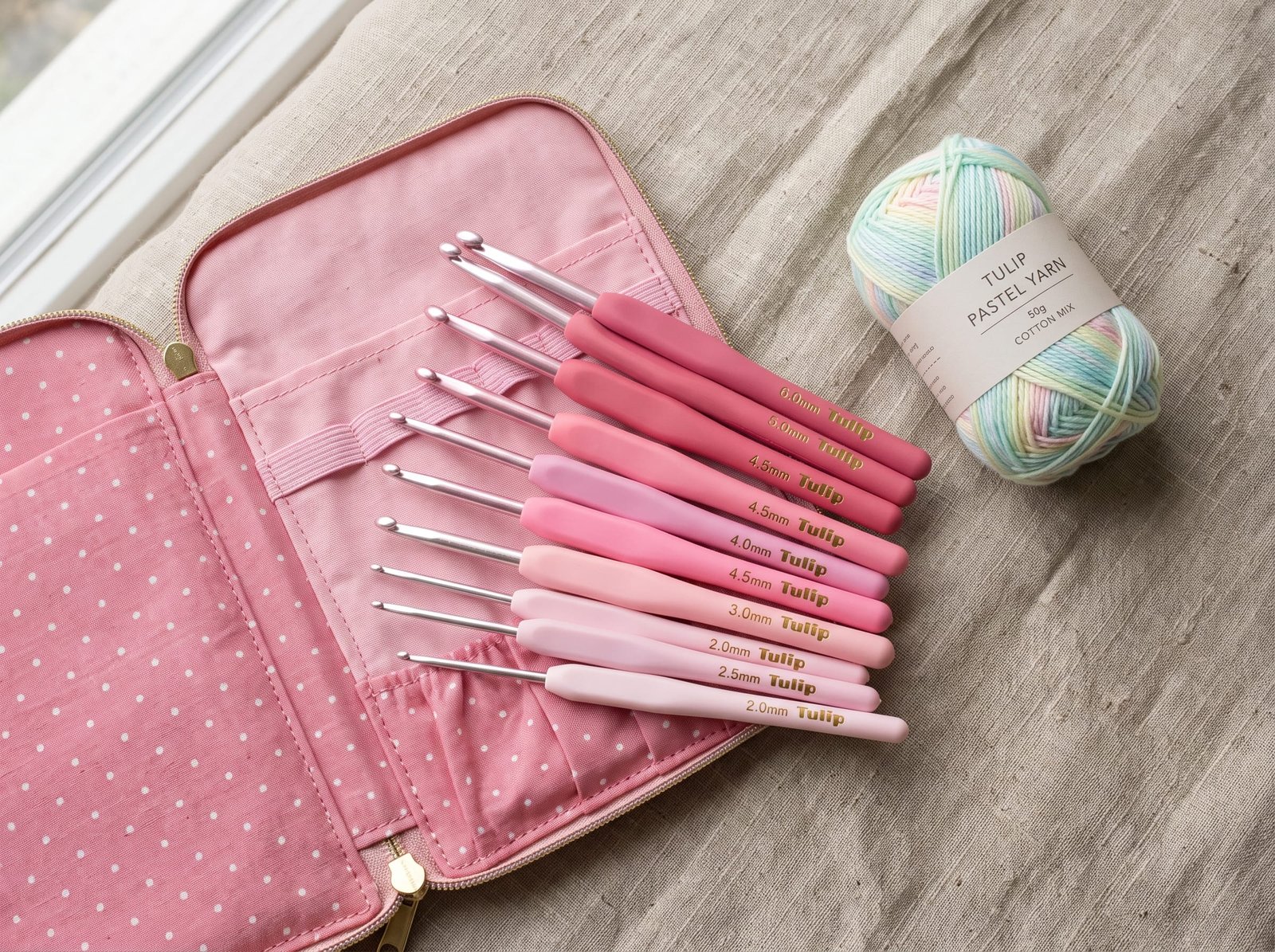
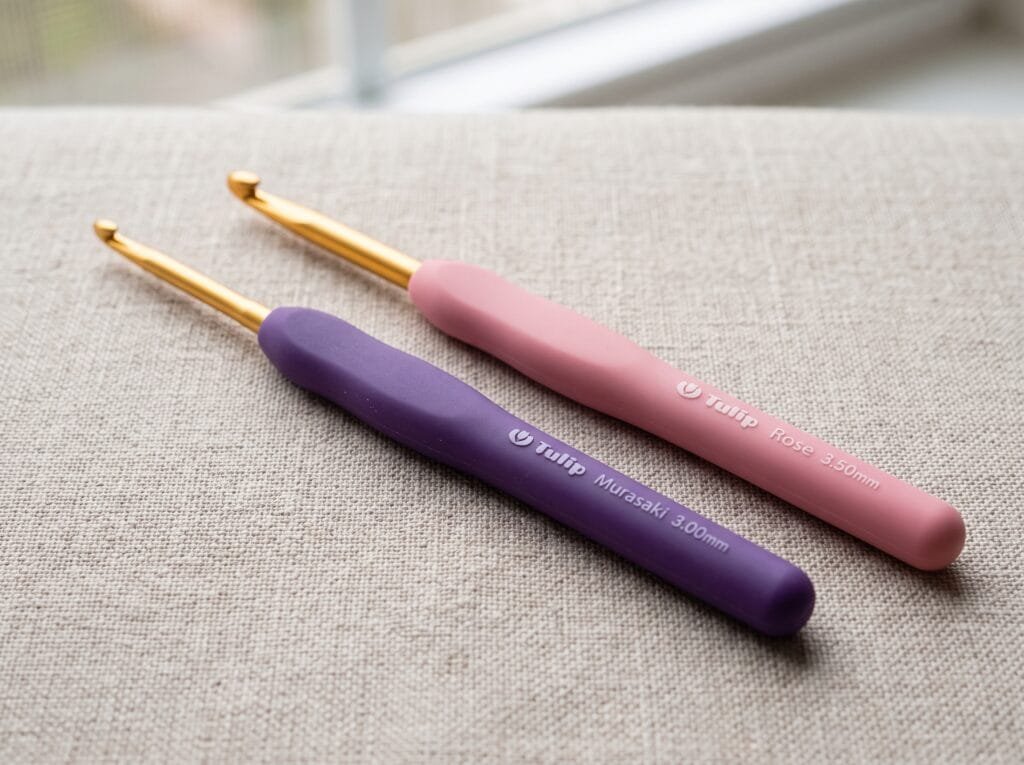
If you’ve seen “Tulip crochet hooks pink” mentioned in a project photo or a crochet group, it’s almost certainly referring to the Etimo Rose line — Tulip’s pink-handled ergonomic hooks, sold both individually and in boxed sets with a coordinating pink polka-dot case.
What actually distinguishes Etimo Rose beyond the color is a subtle pink gradation across the cushioned grip, which some crocheters find genuinely useful rather than purely decorative — the shade shifts slightly from one hook size to the next within a set, which makes it easier to grab the size you want out of a case at a glance instead of squinting at tiny millimeter markings.
Mechanically, Etimo Rose hooks share the same aluminum shaft and cushioned ergonomic grip as Tulip’s other Etimo lines. The color and handle finish are really the differentiator here, not the underlying hook construction — so if you already own a different Etimo line and are only tempted by Etimo Rose for the color, know that you’re not getting a functionally different hook, just a different-colored one.
The Tulip Crochet Hooks Purple Options: Two Different Products
This is a spot where I’ve seen genuine confusion, because “purple Tulip hook” can actually mean two different products depending on what kind of crochet you do.
Etimo Murasaki (“murasaki” means purple in Japanese) is a limited-edition purple version of the standard Etimo cushion-grip line, covering the same everyday 2.00mm–6.00mm range as the regular Etimo and Etimo Rose sets. If you’re doing typical yarn crochet — garments, amigurumi, blankets — and want a purple hook specifically, this is very likely what you’re after.
The GrandHook in 12mm is a completely different product: a large, bulky-yarn hook with a plastic shaft, part of a four-piece color-coded set where each size gets its own color. In that set, the 12mm hook happens to be purple, alongside a green 8mm, a pink 10mm, and a blue 15mm. If you’re shopping for a bulky-yarn project and see a purple GrandHook, it’s specifically the 12mm size in that line, not a smaller everyday hook in a different color.
Worth double-checking the listing description before buying either one, since a quick product photo alone doesn’t always make clear which purple hook you’re actually looking at.
Choosing a Tulip Crochet Hooks Set
Buying a full set rather than a single hook makes sense once you know you’ll reach for a range of sizes regularly, and Tulip offers several different set configurations depending on what you crochet.
A general everyday set (Etimo, Etimo Rose, or a similarly configured line) typically covers somewhere around eight to ten hooks spanning roughly 2.00mm through 6.00mm, often bundled with a case, a tapestry needle or two, and sometimes small scissors or a ruler. This is the set I’d point most yarn crocheters toward first, since it covers the range most projects actually call for.
A steel lace set is a different purchase entirely, aimed at thread crochet and doily work rather than yarn — these sets run much finer, sometimes including well over a dozen hooks down to fractions of a millimeter. Unless you’re specifically doing fine thread work, this isn’t the set to start with.
The GrandHook set covers the opposite end of the spectrum — bulky and super bulky yarn work, in just a handful of larger sizes rather than the wide range of a standard Etimo set.
I’d genuinely discourage buying a full lace-plus-everyday-plus-GrandHook bundle right out of the gate unless you already know you work across all three yarn-weight extremes regularly. It’s easy to end up with a beautiful case full of hooks you’ll only ever use two or three of. Pricing varies by retailer and changes over time, so I’d check current pricing directly on Tulip’s own site or a trusted retailer rather than relying on a number here that might already be out of date by the time you’re reading this.
If you’re still deciding whether a Tulip hook — or any premium ergonomic hook — is worth it for your own hands and habits, my broader crochet needle with hook guide covers hook types and sizing in more general terms, which is worth reading first if you’re newer to crochet and not sure what you’re even shopping for yet.
Material and Head Shape: What Actually Makes Them Feel Different
Beyond color and sizing, the physical construction is where a lot of the actual feel comes from, and it’s easy to overlook when you’re mostly comparing handle colors online.
The Etimo lines use polished aluminum shafts, which glide smoothly and stay lightweight even during a long session. The cushioned grip handle is soft without being squishy — firm enough that it doesn’t compress oddly under sustained pressure, which is something I’ve genuinely had happen with cheaper foam-grip hooks from other brands that started to dent and lose shape after heavy use.
The head shape itself sits closer to a tapered profile than a deep inline groove, which means yarn tends to release smoothly stitch after stitch, though it also means if your tension runs quite loose, yarn can occasionally slip off the hook more readily than it would on a deep-throated inline hook. This isn’t a flaw exactly, just a design trade-off worth knowing about if you already know you have loose tension and rely on a deep groove to keep yarn controlled.
A Bit of Background on the Brand
Tulip Company has been manufacturing needlework tools in Hiroshima for decades, and crochet hooks are only part of a much broader catalog that includes sewing needles, embroidery tools, and knitting notions. That broader manufacturing background is part of why the hooks feel so consistent — this isn’t a company that pivoted into crochet as a trend product, it’s a needlework manufacturer that happens to make excellent hooks as one line among several.
I mention this because it changes how I think about the price. A lot of premium hook brands built their reputation primarily on ergonomic handle design, which is a real and valuable thing, but Tulip’s reputation rests just as much on the precision of the metalwork itself — the actual hook head and throat — which is a harder thing to market with a photo but a very noticeable thing to feel with your hands mid-stitch.
How Tulip Compares to Other Premium Hook Brands
I don’t want to pretend Tulip is the only serious option out there, because it isn’t, and different crocheters genuinely prefer different premium brands for good reasons.
Clover’s Amour and Soft Touch lines are probably Tulip’s closest direct competitor in terms of price point and ergonomic cushion-grip design — I own a few Amour hooks myself and like them for slightly different reasons, mainly a marginally softer grip that some people find more comfortable for very long sessions. Furls, on the other hand, leans into decorative wood and resin handles at a noticeably higher price point, more of a luxury or gift-worthy purchase than an everyday workhorse hook for most people.
My honest take, having used more than one of these brands over the years: the differences between premium hook brands at this level come down to small, personal preferences rather than one brand being objectively better across the board. If you can try a friend’s hook before buying, or pick up a single hook rather than committing to a full set right away, that’s genuinely the best way to figure out which brand’s specific feel suits your hand.
Caring for and Storing Tulip Hooks
Given the price, it’s worth treating these a bit more carefully than a basic drugstore hook, though the care itself isn’t complicated.
Keep them in the case they came with, or a dedicated roll-up pouch, rather than loose in a project bag where they can knock against scissors, stitch markers, or other hardware. The aluminum shaft resists scratching reasonably well, but the polished finish that makes the glide so smooth can dull slightly over years of being tossed around loose with other metal tools.
Wipe the shaft down occasionally, especially if you tend to crochet with lotioned hands, since any residue buildup will eventually start affecting how smoothly yarn releases from the hook. The cushioned grip handles don’t need much beyond an occasional wipe with a slightly damp cloth — avoid soaking them, since the grip material isn’t necessarily designed to handle sustained moisture.
Matching a Tulip Line to What You Actually Crochet
Rather than picking a set purely by color preference, it’s worth thinking about what you actually make most often, since that narrows the decision considerably.
If you mostly work on garments, amigurumi, or blankets in worsted or DK weight yarn, a standard Etimo or Etimo Rose set in the everyday mm range covers essentially everything you’ll need, and the color choice at that point really is just personal preference.
If you’re drawn to fine thread crochet — doilies, lace edging, delicate motifs — the steel lace sets are worth the separate purchase, since a standard Etimo hook simply doesn’t come in a small enough size for that kind of work. This is a genuinely different crochet discipline in terms of hand movement and tension, and the tool has to match it.
If your projects lean toward chunky, fast-finishing pieces — a weekend blanket in super bulky yarn, an oversized cowl — the GrandHook line is the one built for that, and a standard Etimo hook would feel undersized and awkward for yarn that thick regardless of how nice the grip is.
Most crocheters I know who own more than one Tulip line ended up there gradually, the same way I did — buying the everyday set first, then adding a specialty set only once a specific project genuinely called for it, rather than buying everything up front.
A Few Honest Concerns Worth Knowing About
Counterfeits exist. Popular, well-reviewed brands attract knockoffs, and Tulip is no exception, particularly on third-party marketplaces. If a listing price looks unusually low for a full boxed set, or the packaging photos look slightly off compared to other listings, it’s worth buying from an established retailer or the brand’s own storefront rather than chasing the cheapest option you find.
They’re an investment, not a necessity. I want to repeat this because it’s easy to feel like premium hooks are what’s holding your crochet back. They’re not. I made plenty of beautiful, well-made projects for years on basic aluminum hooks before I ever touched a Tulip. If your budget is tight, spend it on yarn first.
Losing track of sizing across lines. Because Etimo, Etimo Rose, and Etimo Murasaki all share the same millimeter range but different colors and case styles, it’s genuinely easy to end up with duplicate sizes across different sets if you buy more than one line over time without checking what you already own.
Frequently Asked Questions
Are these hooks actually worth the price difference over a basic set? For long stitching sessions, fine thread work, or if you already know standard hooks bother your hands, yes, in my experience. For casual or occasional crocheting, a basic set genuinely works fine, and I wouldn’t call the upgrade essential.
Do Tulip hook sizes match US letter sizes exactly? Close, but I’d always check the millimeter number on the hook itself rather than assuming the letter is a perfect match, especially if you’re comparing against a hook from a different brand entirely. Millimeter is the most reliable cross-brand reference.
What’s the actual difference between Etimo Rose and Etimo Murasaki besides color? Functionally, very little — both use the same cushioned-grip aluminum construction and cover a similar mm range. The real difference is the color and case styling, plus Etimo Murasaki has historically been sold as more of a limited-run release, so availability can be less consistent than the standard Rose or original Etimo lines.
Can I mix Tulip hooks with a different brand’s hooks in the same project? Absolutely, there’s no compatibility issue at all — a stitch made with a Tulip hook and a stitch made with any other brand’s hook of the same millimeter size will look identical once it’s off the hook. Mixing brands mid-project is completely fine as long as the sizes match.
Wrapping Up
If you’re weighing whether to buy Tulip crochet hooks, my honest take after several years of using them regularly is that they’re a genuine upgrade in feel and comfort, but not a requirement for making beautiful work. Start with the everyday Etimo or Etimo Rose range if you’re new to the brand, and only branch into the lace or GrandHook sets once you actually know you need that specific range.
If you’ve got a favorite Tulip line of your own, or a different premium hook brand you’d put up against them, I’d love to hear about it in the comments — I genuinely enjoy comparing notes with other crocheters who’ve tried more than one brand. And if this helped you sort out the sizing and color confusion, sharing it or following along for more hook and tool guides keeps this kind of content coming.