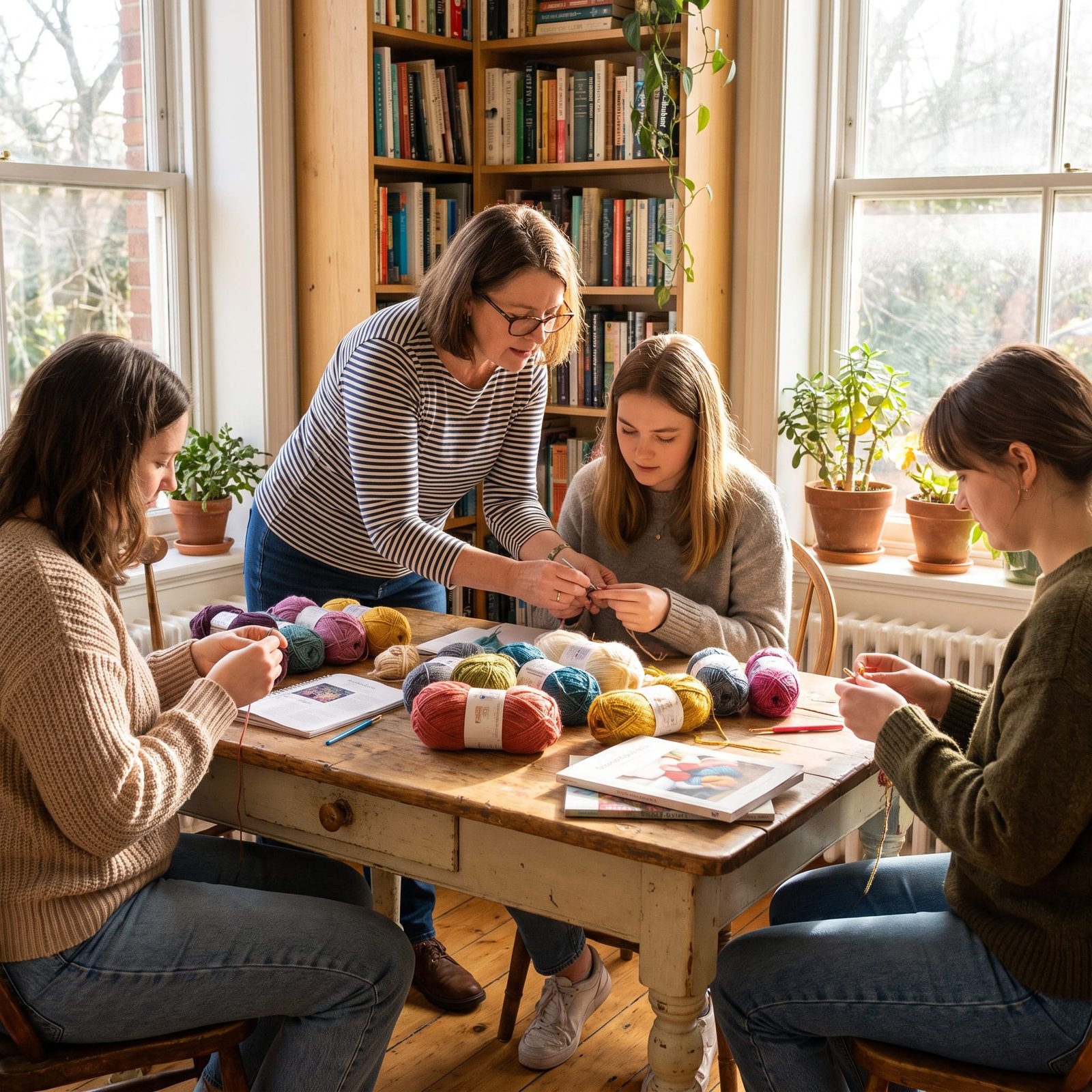
I get asked constantly where someone should go to actually learn, and the honest answer is that not all crochet classes are created equal — some genuinely teach you to crochet, and some just leave you more confused than when you started. In this guide I’ll walk through where I’d actually point a beginner, what free options are genuinely worth your time, and how to know if a paid class is worth the money before you sign up.
I’ve been crocheting for about twelve years now, and I taught a small in-person beginner group at my local library for two of those years, which taught me a lot about which teaching approaches actually land and which ones sound good on paper but leave people stuck. I’ll be drawing on both sides of that experience here — as a student who’s taken plenty of classes myself, and as someone who’s stood in front of a room of frustrated beginners more than once, watching in real time which explanations actually made a stitch click versus which ones just added to the confusion.
What to Actually Look For, Regardless of Format
Before getting into specific options, it’s worth knowing what separates a genuinely good class from a mediocre one, because this applies whether you’re watching a free video or paying for a structured course.
Pacing that matches a true beginner, not someone who forgot what it’s like to be one. A lot of experienced crocheters teach classes and unconsciously skip steps that feel obvious to them but aren’t obvious at all to someone holding a hook for the first time — how exactly to tension the yarn through your fingers, for instance, which sounds trivial and genuinely is not for most people’s first attempt.
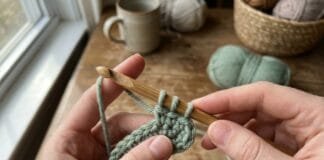
Close-up, well-lit hand shots. This sounds like a small production detail, but I’ve abandoned more than one class because the camera angle made it impossible to actually see what the instructor’s hands were doing at the critical moment of a stitch.
A clear path from “watching” to “doing.” The best classes give you something small and achievable to actually make while you’re learning — a swatch, a coaster, a small square — rather than just demonstrating technique in the abstract with nothing for you to build alongside it.
Crochet Classes for Beginners: Where to Actually Start
If you’re brand new, I’d resist the urge to jump straight into a big structured course before you’ve even held a hook. My honest recommendation for an absolute first-timer is to start with a single, well-reviewed beginner video or short series, make a small practice swatch, and only then decide whether you want to invest more time or money into something more structured.
The core skills every beginner class should cover, in roughly this order, are: how to hold the hook and yarn, how to make a slip knot and a foundation chain, single crochet, and how to turn and work a second row. If a “beginner” class jumps straight into anything more complex than that in the first lesson, it’s probably not actually paced for a true beginner, regardless of how it’s marketed.
I’d also gently push back on the idea that you need to find the single “best” class before starting. I’ve watched plenty of students (including myself, early on) spend more time researching which class to take than they eventually spent actually learning to crochet. Pick a reasonably well-reviewed option and start — you can always switch teaching styles once you know what clicks for you.
Crochet Classes Online Free: What’s Actually Worth Watching
Free doesn’t mean lower quality here — some of the best crochet instruction available right now happens to be free, funded by ad revenue or built as a lead-in to a creator’s paid patterns rather than gated behind a paywall itself.
YouTube channels I’d genuinely point a beginner toward. Bella Coco, run by Sarah-Jayne, is consistently recommended for clear, methodical instruction with good close-up camera work — I’ve used her videos myself when picking up an unfamiliar technique. The Crochet Crowd, run by Mikey, has an extensive beginner-focused library covering fundamentals through pattern reading, and has been a go-to free resource for a long time now. Both are currently active as of this writing, though as with anything online, it’s worth checking a channel is still being maintained before building a whole learning plan around it.
Michaels’ free online classes. Michaels runs both live-streamed and pre-recorded crafting classes online, including a genuine beginner-level “Learn to Crochet” style session, alongside their in-store offerings. It’s worth checking their current online class calendar, since the specific free sessions rotate.
Reddit communities for troubleshooting. r/crochet and r/crochethelp are both large, active communities where posting a photo of a stuck stitch or a confusing pattern line usually gets a helpful response within hours. This isn’t structured instruction exactly, but it’s genuinely useful as a supplement once you’re past total-beginner basics and hitting specific snags a pre-recorded video can’t address.
One honest caveat about free content generally: quality varies a lot more than with paid platforms, simply because there’s no editorial gatekeeping. If a free video’s audio is hard to follow or the hand shots are consistently unclear, it’s fine to just move on to a different creator rather than forcing yourself through a class that isn’t working for your learning style.
Paid Online Crochet Classes Worth the Cost
Paid platforms earn their price mostly through structure — a built curriculum, downloadable pattern support, and sometimes the ability to ask an instructor a direct question, none of which most free YouTube content offers in the same organized way.
Skillshare and Domestika both host structured, multi-lesson crochet courses from named instructors, often bundled into a broader subscription rather than sold as one-off purchases, which makes them worth it mainly if you’re likely to explore other creative subjects too rather than paying just for one crochet course. Creativebug leans specifically into craft and needlework content and tends to have a more curated, smaller course library than a general platform like Skillshare.
My honest take on paid platforms: they’re worth it if you genuinely learn better with a structured curriculum and some accountability, or if you want a specific instructor’s teaching style badly enough to pay for it. If you’re just trying to learn the basic stitches, though, I don’t think a paid subscription buys you meaningfully better instruction than a well-chosen free video series — the actual mechanics of a chain stitch don’t really improve with a bigger budget behind them.
In-Person Crochet Classes: Where to Actually Look Locally
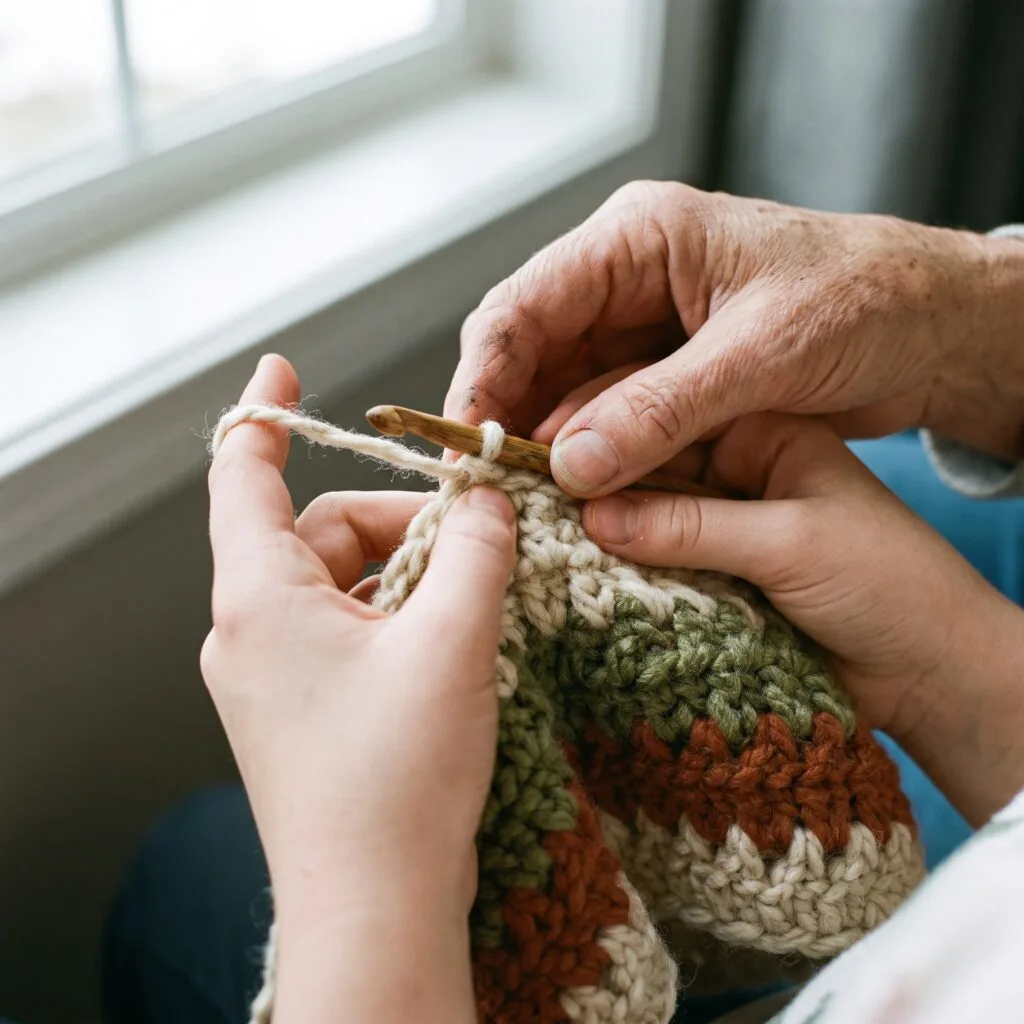
In-person instruction has one real advantage no video can replicate: someone can physically look at your hands and immediately spot why your tension is off, which is often the fastest way to fix a beginner habit that’s quietly making everything harder.
Michaels currently runs in-store crochet classes at many locations, ranging from single beginner sessions to short multi-week series, with supplies typically included in the class fee. It’s worth noting that JOANN, which used to be a common source for in-store craft classes, closed all of its physical stores in 2025 after bankruptcy — Michaels picked up JOANN’s intellectual property and private-label yarn brands, but not the physical stores or their in-store class programs, so if you’re used to JOANN classes from a few years back, that specific option is no longer available.
Independent local yarn shops are genuinely worth checking too, even though they’re easy to overlook next to a big chain. Smaller shops often run their own beginner sessions or ongoing “stitch and help” style drop-in hours, and the instruction tends to be more personalized simply because the class sizes are smaller.
Libraries and community centers are an underrated option. My own library group started as a handful of people meeting once a week with basically no budget, and it grew into a genuinely reliable resource for beginners in the area, entirely free to attend. It’s worth a quick search or a call to your local library to see if something similar already exists near you before assuming you’d have to pay for in-person instruction.
What “Certified Instructor” Actually Means
You’ll sometimes see a local teacher or a class listing mention Craft Yarn Council certification, and it’s worth knowing what that credential actually represents before it factors into your decision.
According to the Craft Yarn Council, their Certified Instructor Program has been running since 1982 and focuses specifically on building teaching skills on top of an existing foundation in knit or crochet technique, rather than being a general skill-level credential for the student themselves. In practical terms, a CYC-certified instructor has gone through a structured process specifically aimed at teaching others clearly, not just being personally skilled at crochet — which are genuinely two different abilities, as anyone who’s had a wonderful crocheter but a confusing teacher can attest.
I wouldn’t treat the absence of this certification as a red flag when picking a class, since plenty of excellent teachers, especially on YouTube, have never gone through a formal certification process. But if you’re choosing between two similarly priced local options and one instructor is CYC-certified, it’s a reasonable tie-breaker, since it at least confirms they’ve been specifically trained in how to teach the material, not just how to do it themselves.
Choosing the Right Class for How You Actually Learn
Not everyone absorbs a new physical skill the same way, and it’s worth being honest with yourself about which format actually works for your brain before committing time or money to one.
If you’re someone who needs to see a movement repeated slowly, multiple times, from different angles before it clicks, video content — free or paid — genuinely suits you better than a single-pass, in-person class where the instructor demonstrates something once and moves on. You can rewind a video as many times as you need without feeling like you’re holding up a room full of other students.
If you learn better from immediate correction — someone noticing your hook angle is off before you’ve practiced the wrong motion fifty times — in-person instruction is worth prioritizing even if it costs more or requires more scheduling effort than watching something on your own time.
And if you’re someone who needs external accountability to actually follow through on learning a new skill, a scheduled class, whether online or in person, tends to work better than an unstructured pile of bookmarked YouTube videos you keep meaning to get to. There’s no shame in knowing that about yourself and picking a format that works with it rather than against it.
Once you’ve got the basics down and are ready to actually start a project, picking the right tool matters too — my crochet needle with hook guide covers hook types and sizing if you’re not sure what to buy before your first class or your first solo project.
Crochet Classes for Kids and Family Learning
Teaching a child specifically comes with different considerations than an adult class, and it’s worth treating it as its own category rather than just a slower version of adult instruction.
Attention span matters more than skill difficulty for younger kids. A twenty-minute session covering just the chain stitch, repeated over several short sessions, tends to work far better than one longer class trying to cover chain and single crochet in the same sitting. I learned this the hard way running my library group, where I initially planned adult-length sessions for a mixed-age group and had to noticeably shorten and simplify things once younger kids started showing up.
Bigger hooks and chunkier, smooth yarn make a genuine difference for a child’s first attempts, mostly because both are easier to see and slower to lose track of mid-stitch. Several of the YouTube creators and in-person programs mentioned above do offer kid-specific content or sessions, so it’s worth searching specifically for “kids” or “family” alongside “beginner” when looking at any given platform’s class list, rather than assuming a standard adult beginner class will translate directly.
A Note on Evaluating Any New Platform You Come Across
New crochet class platforms and creators show up constantly, and it’s worth having a quick personal checklist for evaluating one you haven’t tried before, rather than committing time or money purely off a polished landing page.
Look for a genuine sample lesson before committing, whether that’s a free preview video or a trial period. A platform that won’t let you see any actual teaching before you pay is a reasonable reason for hesitation. Check how recently new content was added — a course library that hasn’t been updated in years isn’t necessarily bad, but it’s worth knowing before you invest time expecting active support or community engagement that may not actually exist anymore.
Read a handful of specific, detailed reviews rather than just an aggregate star rating, since a high average score can still hide a common, specific complaint (confusing pacing, poor audio, hard-to-see hand shots) that would matter a lot to your own learning style even if it didn’t bother other reviewers as much.
Jumping straight to a paid course before trying anything free. Plenty of people spend money on a beginner course only to discover they actually prefer a completely different teaching style, one that happened to be free the whole time. Try a free option first if one’s available; you can always upgrade to paid instruction once you know what you respond to.
Picking a class based purely on the finished project photo rather than the actual skill level. A gorgeous finished amigurumi in a class thumbnail doesn’t tell you whether the instruction itself is genuinely beginner-paced. Read a few reviews or watch a preview clip before committing, especially for paid content.
Giving up after one confusing class instead of switching teachers. I cannot stress this one enough, because I’ve watched it happen constantly. If a particular explanation genuinely isn’t landing for you, that’s frequently about a mismatch between teaching style and your own learning style, not a sign that crochet itself is too hard for you. A different instructor explaining the exact same stitch can be the difference between total confusion and an instant “oh, that’s what that means.”
Frequently Asked Questions
Do I need to take a class to learn to crochet, or can I just teach myself from a book? Plenty of people successfully learn from books and diagrams alone, especially if you’re comfortable interpreting written instructions and stitch charts. I’d still say video or in-person instruction is easier for most true beginners, mainly because crochet is such a physical, hands-and-tension-dependent skill that’s genuinely hard to fully convey through a static diagram alone.
How long does it typically take to get through a beginner crochet class series? This varies enormously depending on how much you practice between sessions, but most structured beginner series I’ve seen or taught are built around four to six sessions or video lessons, covering foundational stitches through a simple first project. Actual comfort with the basics usually takes a few weeks of regular practice beyond just finishing the class itself.
Are free crochet classes actually as good as paid ones, or is that just wishful thinking? For pure fundamentals, genuinely yes in my experience — a slip knot is a slip knot regardless of who’s teaching it or whether you paid for the lesson. Paid classes tend to earn their cost through structure, curriculum planning, and sometimes direct instructor feedback, rather than through fundamentally better technique instruction on the basics.
I took a beginner class and still can’t get my tension consistent. Is something wrong with me? Not at all — tension is genuinely one of the slowest things to become consistent, and it’s much more about repetition over time than about any single class teaching it “correctly.” I still notice my own tension shift slightly depending on how tired my hands are or how long I’ve been working, over a decade in.
Is it worth taking more than one crochet class, or should I stick with one instructor the whole way through? Taking classes from a couple of different instructors, even after you’re past the beginner stage, is genuinely valuable rather than a sign you picked wrong the first time. Different teachers tend to explain the same technique with slightly different mental models, and I’ve had moments where a second instructor’s explanation of something I “already knew” suddenly made a detail click that the first one never quite got across.
Wrapping Up
Whatever combination of crochet classes you end up trying, the honest truth is that consistency matters more than finding some mythical perfect course. A decent free YouTube series, watched and actually practiced alongside, will teach you more than a beautifully produced paid class you never quite get around to finishing. The format matters far less than actually sitting down with a hook in your hand on a regular basis.
If you’ve got a class or instructor that genuinely worked for you, share it in the comments — I love hearing what’s actually landed for other people, since it’s rarely the same answer twice. And if this helped point you toward the right starting place, sharing it or following along for more beginner-focused guides keeps this kind of content coming.